
Our
Products
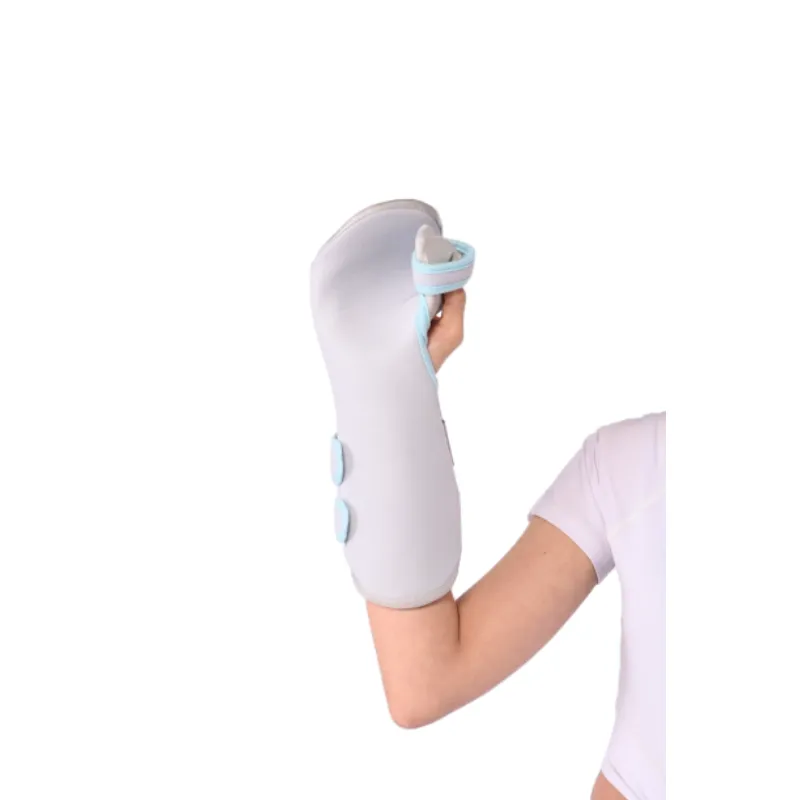

how to put on a sling for arm
Arm Sling Pouch: Field Notes on Real-World Comfort and Control If you’re weighing options for a post-injury shoulder support, the pouch arm sling with immobilizer has become the quiet hero in clinics and home recovery. To be honest, what people want is simple: stable immobilization without the sweat and hassle. This model—marketed as the Arm Sling Pouch—leans into breathable textiles and easy-on straps. I’ve worn a few across trade shows; comfort gets noticed quicker than spec sheets. What’s trending Breathable mesh + foam laminates that don’t chafe during summer rehab. Simplified immobilizer straps (waist or torso anchor) to curb abduction drift. Hospital-to-home continuity: one SKU that fits most, with QR-code instructions. Sustainability whispers: dye-free linings and recyclable cartons—small, but welcome. Product specs at a glance Model Arm Sling Pouch (with immobilizer strap) Materials Breathable polyester/nylon mesh, PU foam, brushed loop liner, hook-and-loop, acetal buckles Sizing Universal (≈ 28–36 cm pouch length), ambidextrous Adjustability Shoulder strap 60–120 cm; immobilizer torso strap 60–110 cm Weight ≈ 180–240 g (size and hardware may vary) Care Hand wash cold; air dry; avoid high heat Service life Around 6–12 months of typical clinical/home use; real-world use may vary Compliance Produced under ISO 13485 QMS; materials evaluated to ISO 10993-10 irritation/sensitization Where it’s used (and why it helps) Post-op shoulder (rotator cuff, labrum) to reduce motion during early healing. Acute dislocations or proximal humerus fractures—short-term stabilization. Workplace or travel protection when bumps are inevitable. Many customers say the breathable pouch keeps skin calmer on hot days. Clinicians like the immobilizer strap for consistent adduction. As always, follow your surgeon or therapist’s protocol. How it’s made (quick process flow) Materials: mesh + foam lamination; brushed loop inner for comfort. Cutting: CNC knife cutting for repeatable curves. Stitching: bartack reinforcements at load points; edge binding to prevent fray. Testing: fabric tensile ASTM D5034; abrasion ISO 12947; biocompatibility per ISO 10993-10 panels. QC: 100% strap length check; buckle snap/creep checks; lot traceability. Packaging: flat-pack with IFU; barcode + lot ID for hospitals. Internal QA sample data (n=10, 2024): average strap creep under 5 N load ≈ 2.1 mm/30 min; Martindale abrasion 20,000 cycles with no delamination. Not clinical performance—just durability hints. Vendor snapshot (who’s doing it well?) Vendor Lead Time Customization Compliance Notes JH Orthopedic (factory) ≈ 15–25 days Logo, colorways, strap lengths ISO 13485 system, ISO 10993 materials Direct origin, stable QC Marketplace Brand Ready stock Limited Varies Good for one-offs Hospital Supplier 30–45 days Moderate Strong documentation Great compliance, higher cost Customization Color trims for clinics, extended straps for bariatric sizing, left/right-specific immobilizer tabs, IFU translations, and private-label cartons. Small tweaks, big comfort. Tiny case files Rotator cuff patient, 54, wore a pouch arm sling with immobilizer for six weeks; praised the mesh during commute heat. Reported less neck fatigue after adjusting strap angle per therapist. Warehouse supervisor post-dislocation used a pouch arm sling with immobilizer two weeks on shift (light duty). The immobilizer curbed “accidental reach” moments. Standards, notes, and origin Typically aligned with ISO 13485 QMS and ISO 10993-10 for skin contact textiles; fabric strength per ASTM D5034; abrasion per ISO 12947. CE-markable as Class I (non-sterile) in many EU cases—your importer should verify. Origin: No.240 Xingying West Street, Anping County, Hebei Province, China. Citations ISO 13485:2016 Medical devices—Quality management systems. ISO 10993-10:2021 Biological evaluation—Irritation and skin sensitization. ASTM D5034-21 Standard Test Method for Breaking Strength and Elongation of Textile Fabrics (Grab Test). AAOS OrthoInfo—Shoulder Surgery and Rehabilitation Guidance: https://orthoinfo.aaos.org NICE NG38—Fractures (non-complex) assessment and management: https://www.nice.org.uk
Why Choose Us



Read
Our
Blog

No.240 Xingying West Street,Anping County,Hebei Province,China


Have a question? Keep in touch.


Copyright © 2025 Hebei
Jianhang
Technology
Co.,Ltd.
All Rights Reserved. Privacy Policy


